What Are the Main Differences Between Andhra Spices and North Indian Spices?
When comparing Andhra spices to North Indian spices, the first thing that stands out is heat. Andhra cuisine is famously fiery, known for generous use of red chillies—especially Guntur and Byadgi varieties. North Indian dishes, on the other hand, lean toward aromatic, warming spices like clove, cinnamon, bay leaf, and cardamom.
This contrast is central to any Indian spices comparison: Andhra = bold heat; North India = warm aromatics.
Why Is Andhra Food Known to Be Much Spicier?
Andhra Pradesh is one of India’s largest chilli-producing states. Thanks to this, households and restaurants use:
• Guntur chilli powder
• Red chilli pastes
• Spicy pickles (avakaya, gongura)
• Fiery podis (spice powders)
This heavy use of chillies defines South vs North Indian food differences — South Indian regions like Andhra prefer sharp, lively heat over the richness preferred in the North.
Which Spices Are Most Common in Andhra Cuisine?
Most commonly used Andhra spices include:
- Red chillies (Guntur, Byadgi)
- Mustard seeds
- Cumin
- Fenugreek
- Curry leaves
- Garlic
- Tamarind
- Asafoetida
These build a base of sharp, tangy, and spicy flavours that are signature to dishes like pulusu, koora, and biryani Andhra-style.
Which Spices Are Most Common in North Indian Cooking?
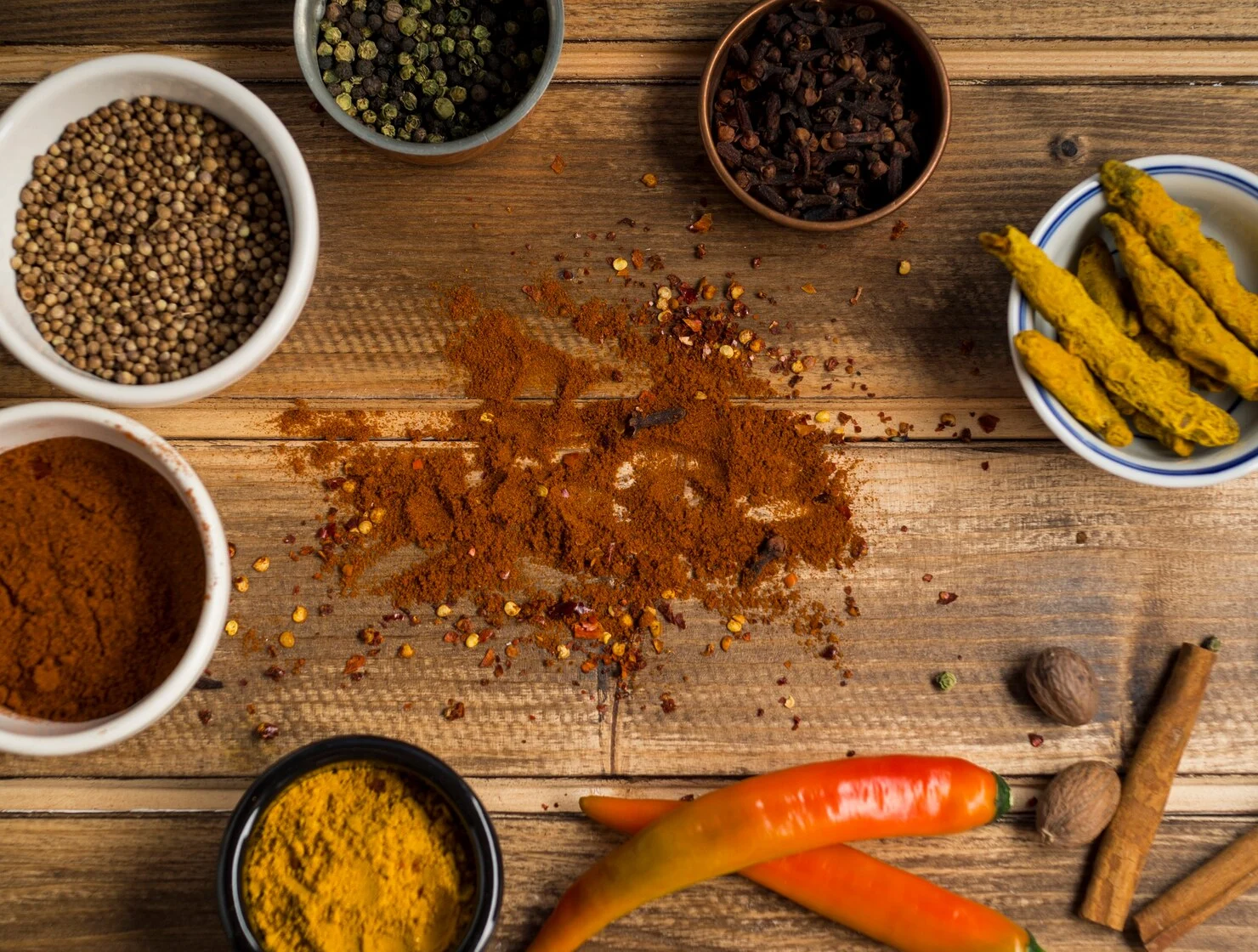
North Indian cooking uses spices for aroma rather than heat. Key spices include:
- Cumin & coriander
- Cloves & cinnamon
- Bay leaves
- Cardamom
- Nutmeg & mace
- Kashmiri chilli (mild, for color)
These bring warmth and fragrance to curries like butter chicken, dal makhani, paneer masala, and rich gravies.
Is Andhra Food Hotter Than Other South Indian Cuisines?
While South Indian cuisines generally use chillies and tangy ingredients, Andhra cuisine is considered the spiciest in the South.
The high chilli ratio, plus tangy tamarind and garlic, intensifies flavors more than in Karnataka or Tamil Nadu cooking. This is why South vs North Indian food comparisons always highlight Andhra as the heat champion.
Do Andhra Spices Change When Cooking Vegetarian vs Non-Vegetarian Food?
Yes.
Vegetarian dishes (pappu, poriyal, pulusu) rely heavily on tempering spices like mustard seeds, cumin, garlic, and curry leaves.
Non-vegetarian dishes (spicy Andhra chicken, mutton kura) increase chilli content and often include whole garam masala, but still remain spicier than North Indian meats.
Why Do North Indian Dishes Taste Richer or Creamier?
North India incorporates dairy-based ingredients like:
- Ghee
- Butter
- Cream
- Curd
These mellow the spices, giving dishes a creamy, luxurious profile.
Andhra dishes rarely use dairy; instead, they use light oils and spice-forward combinations, making Andhra spices taste sharper and more intense.
How Do Spice Blends Differ Between Andhra and North India?
Andhra blends:
- Chilli powder mixes
- Rasam podi
- Kura karam (spice mix for curries)
- Gunpowder (idli podi)
North Indian blends:
- Garam masala
- Chole masala
- Biryani masala
- Paneer tikka masala
This shows a major Indian spices comparison: Andhra blends rely heavily on chillies; North Indian blends rely on warm, sweet, and aromatic spices.
Which Cuisine Should You Choose If You Prefer Spicy Food?
If you love intense heat and bold flavours, choose Andhra food — especially dishes like Andhra chicken curry, tomato pappu, and spicy pickles.
For milder but aromatic and creamy flavours, go for North Indian cuisine.
What Do People Say About Andhra Spices vs North Indian Spices?
Most food lovers say:
- Andhra food is “bold, fiery, and addictive.”
- North Indian food is “rich, comforting, and aromatic.”
Both have loyal fans, but it all comes down to your heat tolerance and flavour preference.